How to Differentiate Reading Passages Without Watering Down the Learning
When students in the same classroom read at very different levels, it can be tempting to simply give struggling readers an easier passage.
Sometimes that is appropriate.
But differentiating reading does not always mean making the text easier. The goal is to help students access the same important ideas while providing the support each reader needs.
Reading comprehension depends on much more than the length of a passage. Students also bring differences in decoding ability, fluency, vocabulary, background knowledge, and language comprehension.
So before rewriting a passage, ask:
What is making this text difficult for this student?
1. Simplify Sentence Structure When Necessary
Long, complicated sentences can make a passage difficult to follow—especially for beginning readers or students with language difficulties.
Consider this sentence:
Original:
Here are some fun ways to celebrate the 100th day of school. You can make a 100-piece puzzle to display in the classroom, build a structure with 100 blocks, or draw 100 animals on a mural.
A more accessible version might be:
Differentiated:
Celebrate the 100th day of school! Here are some ideas. Make a 100-piece puzzle. Build something with 100 blocks. Draw 100 animals on a mural.
The information is essentially the same, but the second version uses shorter sentences and simpler syntax.
That can reduce the language load without changing the main idea.
2. Be Careful About Removing Vocabulary
My original approach to differentiation was to replace unfamiliar vocabulary with easier words.
Sometimes that makes sense.
For example, build something may be easier to understand than build a structure.
But unfamiliar words are not automatically words we should remove.
Vocabulary growth is an important part of reading comprehension. If the word structure is important to the lesson or likely to appear again, it may be better to teach the word rather than eliminate it.
You might say:
structure — something that has been built
Then students can encounter the richer word while still understanding the passage.
The question becomes:
Does this word create an unnecessary barrier, or is it a word worth teaching?
3. Keep the Text and Add Support
Sometimes the best differentiation requires no rewriting at all.
Instead, you might:
preview important vocabulary
build background knowledge before reading
provide a picture, diagram, or brief explanation
read part of the passage aloud
chunk the passage into shorter sections
stop after each section to discuss meaning
provide guiding questions
let students reread the passage
pair reading with audio when appropriate
This allows students to work with richer text while receiving the support they need to understand it.
4. Differentiate the Task, Not Just the Passage
Students do not always need different texts.
Sometimes students can read the same passage but respond at different levels.
For example, after reading a passage about animals, students might all work on the same central idea while completing different tasks.
One student might identify:
What animal is the passage about?
Another might answer:
What is the main idea of the passage? Give two supporting details.
Another might explain:
How do the details in the passage support the author's main idea?
The content remains connected, but the level of response changes.
This can make differentiation much easier to manage in a classroom.
5. Consider Decoding Ability Separately From Comprehension
A student may understand sophisticated ideas but still struggle to decode the words on the page.
That distinction matters.
If the instructional goal is decoding practice, the text should match the phonics knowledge the student has learned.
If the instructional goal is comprehension, vocabulary, or content knowledge, the student may benefit from a more complex passage presented with teacher support, partner reading, or audio.
A child's ability to read the words independently and a child's ability to understand the ideas are not always at the same level.
So, What Does Good Differentiation Look Like?
There isn't one formula.
Depending on the student and the purpose of the lesson, you might:
simplify an especially complicated sentence
explicitly teach an unfamiliar word instead of replacing it
provide background knowledge
divide the text into manageable sections
give additional decoding support
allow supported listening when comprehension is the goal
adjust the questions or response task
provide more opportunities to reread
The important thing is to identify why the student is struggling before deciding how to change the lesson.
One Passage, Different Pathways
Differentiation shouldn't mean lowering expectations.
It means giving students different pathways to meaningful reading.
Sometimes that means changing the passage.
Sometimes it means changing the support.
And sometimes the text doesn't need to change at all.
The goal is not to make reading easy. The goal is to make successful reading possible.
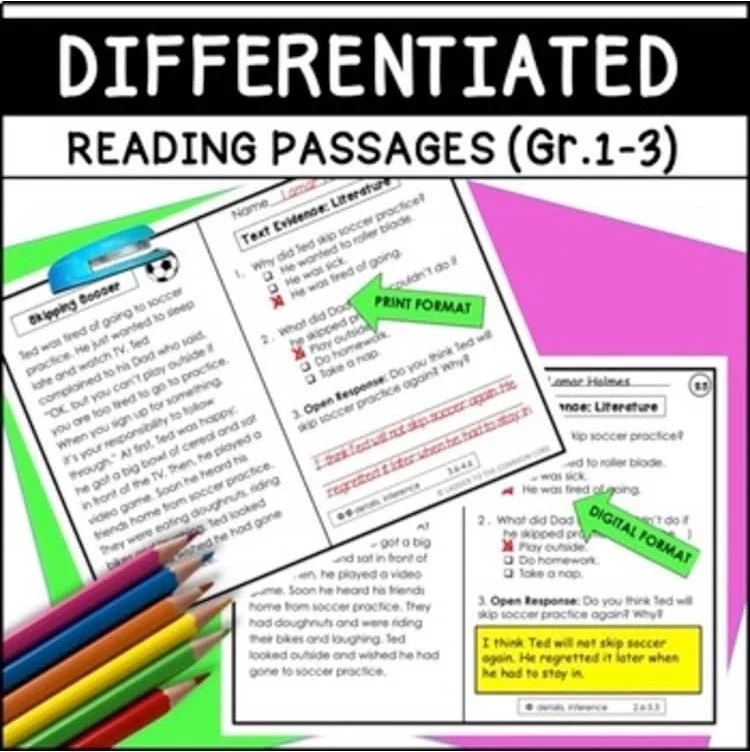
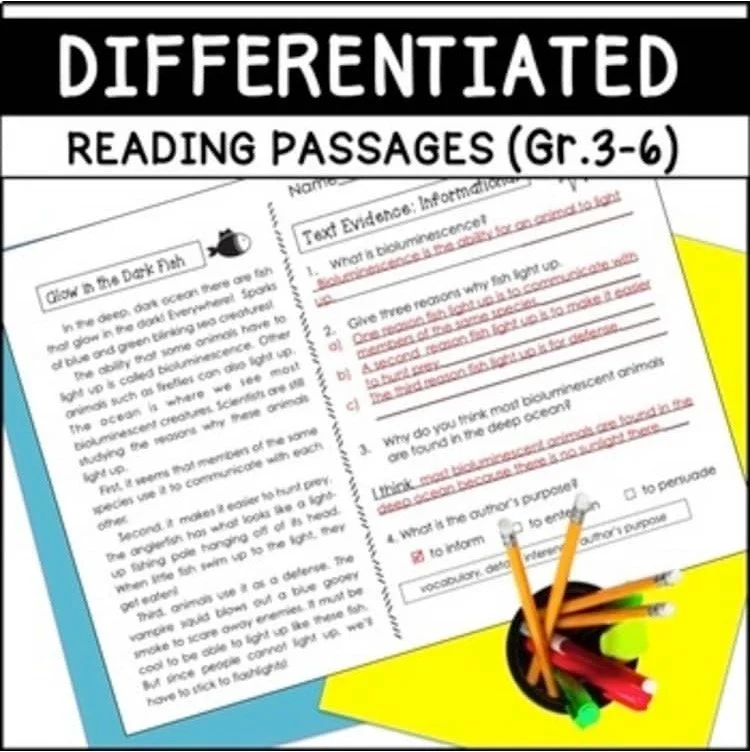
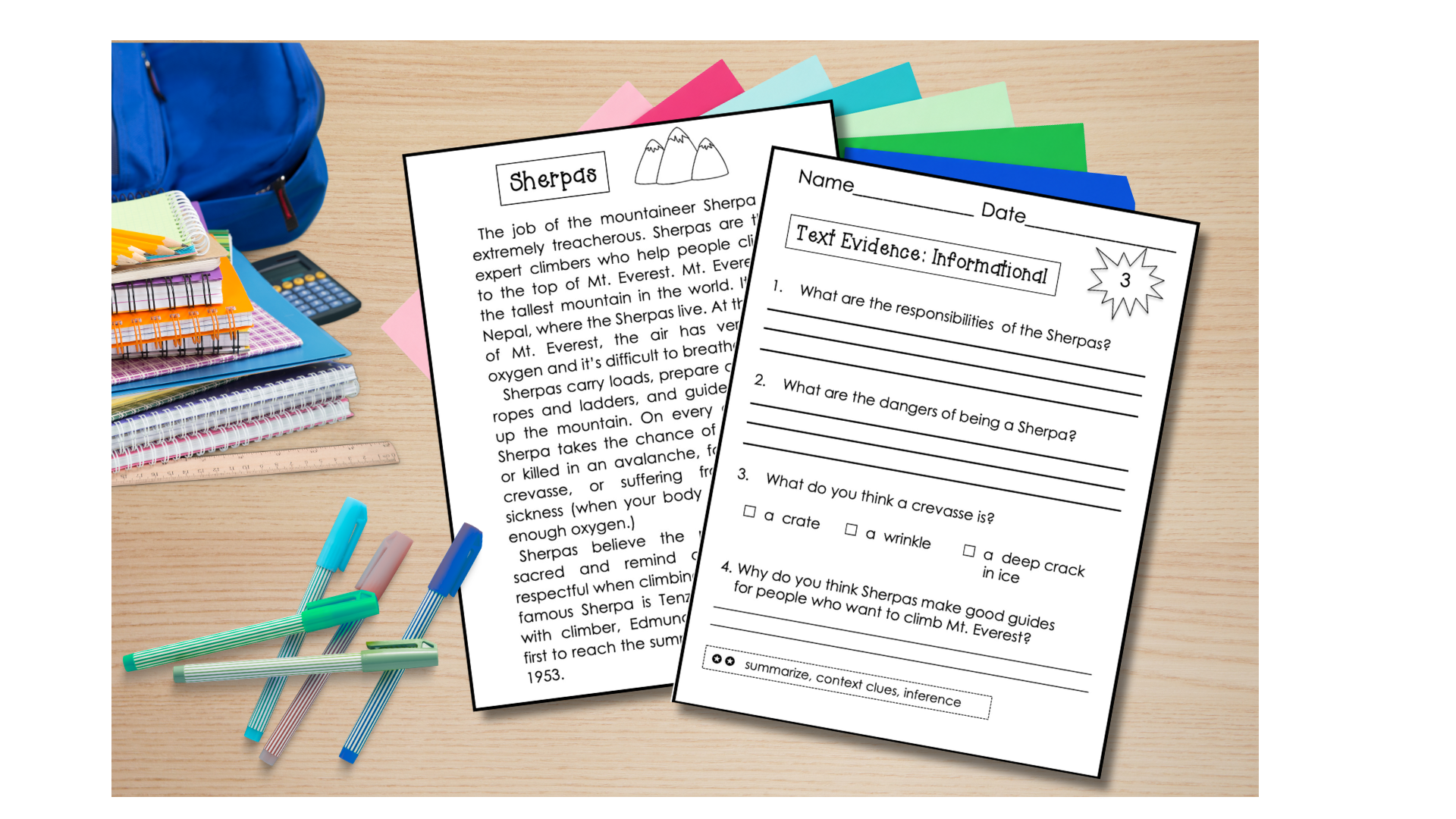
Here are some differentiated reading passages from Teachers Pay Teachers TpT.