
What if changing just one letter at a time could help students become more confident readers and spellers?
Word ladders are one of my favorite ways to reinforce phonics skills. They require very little preparation, can be completed in just a few minutes, and provide meaningful opportunities for students to practice reading, spelling, and manipulating sounds in words.
They are also a wonderful alternative to traditional phonics worksheets because they encourage children to actively think about how words work.
What Are Word Ladders?
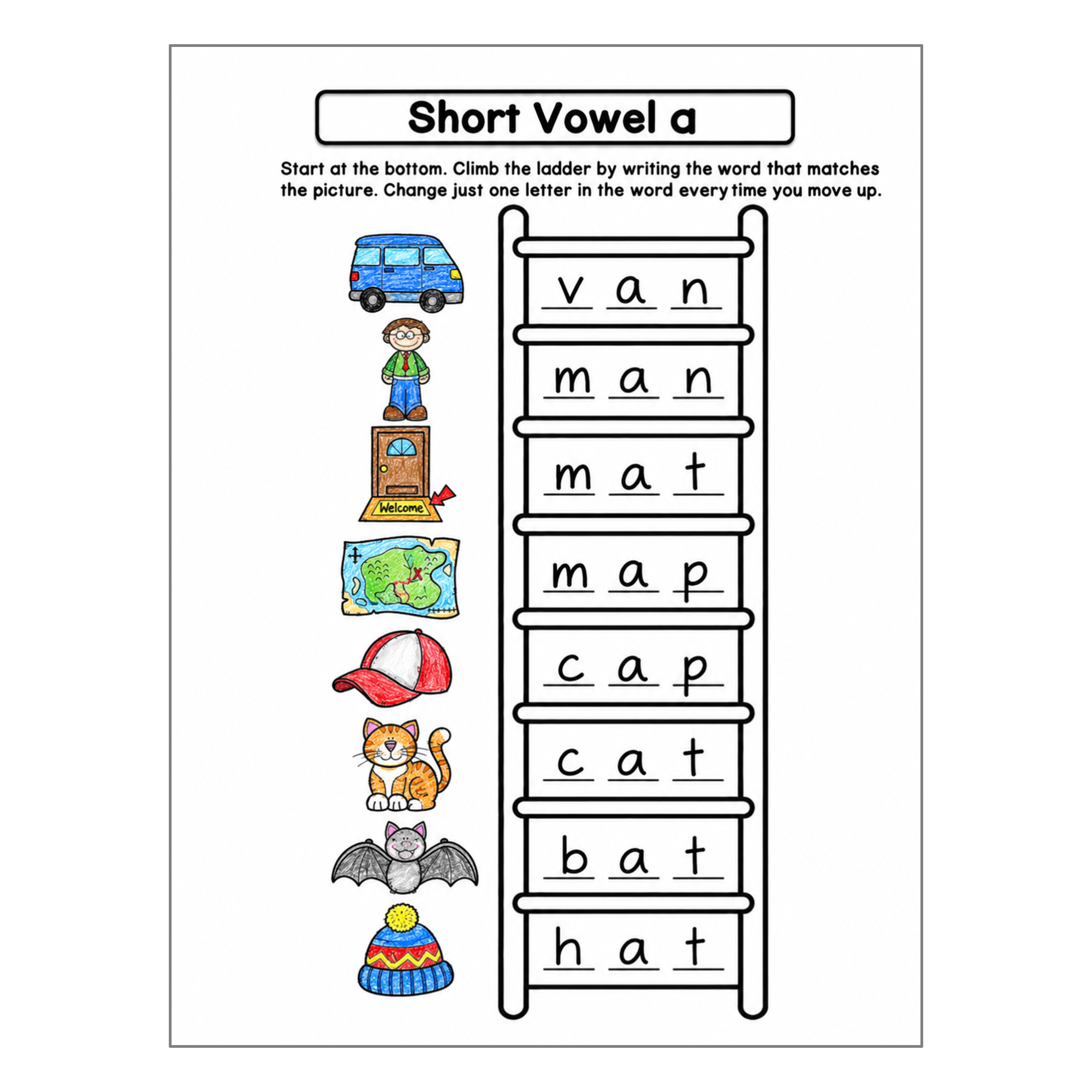
A word ladder is a word-building activity in which students change, add, or remove letters to transform one word into another.
A simple word ladder might look like this:
cat → bat → bet → pet → pen
Notice how each word builds upon the previous word. Rather than reading a list of unrelated words, students must pay attention to what changes and what stays the same.
As students develop stronger phonics skills, word ladders can incorporate increasingly complex spelling patterns, including consonant blends, digraphs, silent e, vowel teams, r-controlled vowels, and diphthongs.
How Do Word Ladders Support the Science of Reading?
Word ladders bring together several important components of effective reading instruction in one activity.
Phonemic awareness: Students identify, add, delete, and substitute individual sounds within words.
Phonics: Students connect the sounds they hear to the letters and letter combinations that represent those sounds.
Encoding: Students apply their phonics knowledge to spell new words rather than simply recognize them.
Decoding: Students blend sounds together to read each newly formed word.
Orthographic mapping: By attending to the relationships between sounds and spellings, students strengthen the connections that help words become stored in long-term memory for automatic recognition.
Word ladders are particularly valuable because they combine reading and spelling practice. These two skills reinforce each other and help students develop a deeper understanding of the alphabetic system.
How to Teach Using Word Ladders
When introducing word ladders, I recommend modeling the process rather than expecting students to complete the activity independently right away.
Here is a simple routine to try.
Read the starting word. Have students say the word aloud.
Identify the sounds. Encourage students to listen carefully to the individual sounds in the word.
Introduce the change. Ask students to change, add, or remove a sound or spelling, depending on the activity.
Build the new word. Have students write the letters that represent the new word.
Read the new word. Students blend the sounds together and check that the word makes sense.
For example, if the starting word is map, you might ask students to change the first sound to /t/.
What sound changed? Which letter needs to change? What is the new word?
Students write and read tap before moving on to the next word in the ladder.
Encourage students to read each new word rather than simply complete the spelling task. The goal is not just to finish the ladder but to understand how sounds and letters work together.
Start Simple and Build Complexity
One of the benefits of word ladders is that they can be adapted to meet students at many different stages of reading development.
Choose word ladders that reinforce phonics patterns your students have already been taught. Word ladders are most effective when they provide purposeful practice rather than introduce too many unfamiliar spelling patterns at once.
Can You Use Word Ladders to Teach Sight Words?
Absolutely! In fact, this is one of the reasons I expanded my original phonics word ladder collection to include the Dolch sight words.
For many years, sight word instruction focused heavily on memorizing whole words. However, many high-frequency words are fully decodable, and even words with irregular spelling patterns often contain parts that students can decode.
Consider these examples:
and: All three sounds can be represented using familiar letter-sound correspondences.
make: This word follows the familiar silent e spelling pattern.
said: The beginning and ending sounds are predictable, but the letters ai represent an unexpected vowel sound.
Instead of asking students to memorize the entire word visually, we can help them recognize the predictable parts and learn the unexpected part by heart.
Incorporating Heart Words into Word Ladders
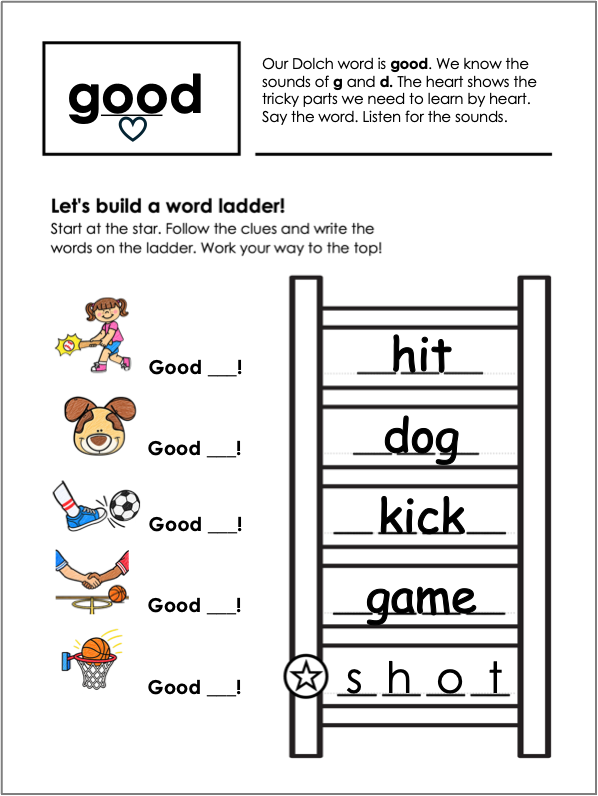
Heart words are words with one or more sound-spelling relationships that students need to learn by heart.
It is important to distinguish between two types of heart words:
Temporary heart words contain spelling patterns that students have not yet been explicitly taught. Once students learn those patterns, the words may become fully decodable.
Permanent heart words contain unexpected sound-spelling relationships that students will continue to need to remember.
For example, play might be a temporary heart word for a student who has not yet learned the ay vowel team. Once that pattern has been taught, the student can decode the entire word.
The word said, on the other hand, contains a spelling that remains unexpected.
My Dolch word ladder activities incorporate heart word markings to help students focus on the parts of words that require special attention while applying their phonics knowledge to the remaining parts.
This gives students a more meaningful way to practice high-frequency words while continuing to develop decoding and encoding skills.
6 Ways to Use Word Ladders in Your Classroom
Word ladders are easy to incorporate into an existing literacy routine without adding another time-consuming activity to your day.
Morning work: Provide a short word ladder to review previously taught phonics skills.
Small-group reading instruction: Guide students through each word while discussing sounds and spelling patterns.
Reading intervention: Target specific phonics skills that students need additional opportunities to practice.
Literacy centers: Provide independent practice with familiar spelling patterns.
Quick formative assessment: Observe where students struggle with sound manipulation, decoding, or spelling.
Home practice: Send home a short, manageable activity to reinforce classroom instruction.
Word ladders can also be especially helpful for students who benefit from predictable routines, structured practice, and repeated opportunities to experience success.
Explore My Phonics and Dolch Word Ladder Collection
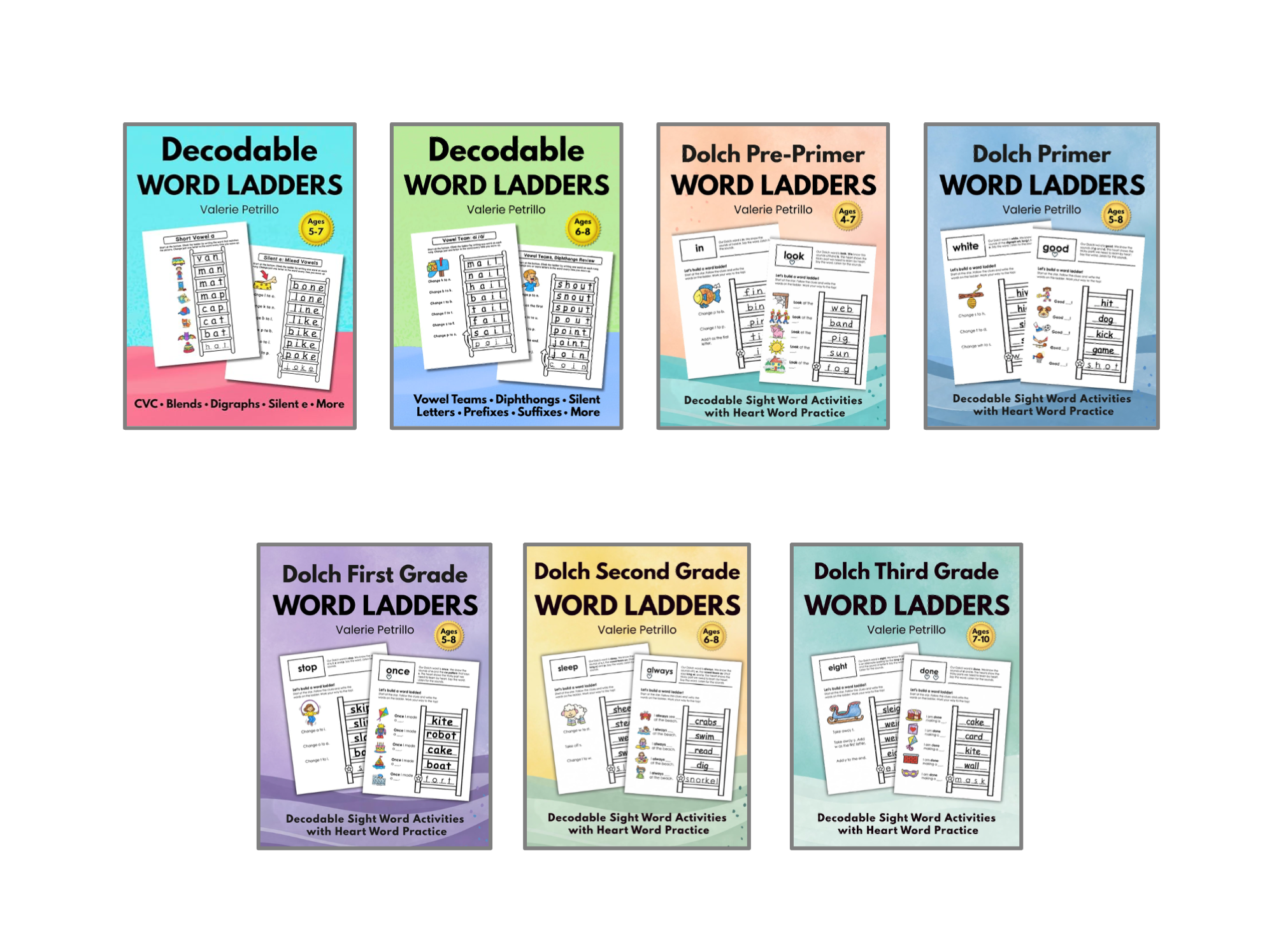
I have recently completed a collection of seven word ladder resources designed to make phonics and high-frequency word practice accessible, purposeful, and fun.
The collection includes two phonics-focused books and five Dolch sight word books.
Phonics Word Ladders
My two phonics word ladder books provide targeted practice with a wide range of spelling patterns, from foundational phonics skills to more advanced word-building activities.
Skills across the two books include:
CVC words and short vowels
Consonant blends and digraphs
Silent e words
Vowel teams and diphthongs
Silent letters
Prefixes and suffixes
These resources are ideal for reinforcing skills taught as part of a systematic phonics program.
Dolch Sight Word Ladders
My Dolch word ladder series takes a phonics-based approach to practicing high-frequency words, including both decodable words and heart words.
The series includes:
Dolch Pre-Primer Word Ladders
Dolch Primer Word Ladders
Dolch First Grade Word Ladders
Dolch Second Grade Word Ladders
Dolch Third Grade Word Ladders
Students practice high-frequency words through word-building activities that encourage them to think about sounds, letters, and spelling patterns rather than rely solely on memorization.
The grade-level designations follow the traditional Dolch word lists, but teachers and parents can select resources based on a child's individual reading needs rather than grade level alone.
Explore the Word Ladder Collection on Amazon
Explore Word Ladders on Teachers Pay Teachers
Small Changes Can Make a Big Difference
Word ladders do not need to be lengthy or complicated to be effective. Just a few minutes of focused word-building practice can provide valuable opportunities for students to strengthen their phonics, spelling, and word recognition skills.
Best of all, word ladders help children discover that words are not simply collections of letters to memorize. They are made up of sounds and spelling patterns that can be understood, manipulated, and applied to new words.
And that is a discovery worth making—one rung at a time.
Try Word Ladders for FREE!
Download my FREE Dolch Word Ladder Sampler and discover how phonics-based word ladders can help your students build reading and spelling skills.